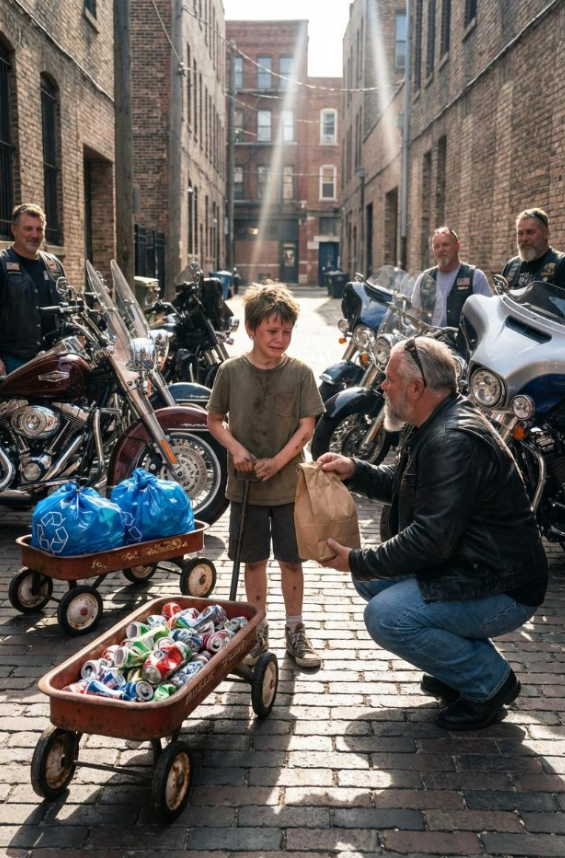
For two long years, a young boy worked in silence, without telling anyone, hiding a burden he was carrying alone, until the truth finally came out and reached compassionate people who could not look away and chose to act for him.
For two long years, a young boy worked in silence, without telling anyone, hiding a burden he was carrying alone, until the truth finally came out and reached compassionate people who could not look away and chose to act for him.
At Brookside Heights, no one really noticed this low-key boy with the worn-out sneakers and determined gait, not really, not in the way that counts when a child accomplishes something much bigger than his age would suggest. You could see him, of course – you always see the children – but no one looked at him carefully enough to read the story that weighed on his shoulders. His name was Noah Reyes, and for two years he carried a burden that most adults would have collapsed under, simply because he believed that love was about doing everything possible, even if it was painful.
He started collecting cans at the age of eight. It was not a dramatic decision, nor a storm, nor a slamming door, nor a heartbreaking statement. It all began as discreet courage always does: with a simple thought that has never left it. His mother, Lila Reyes, worked two shifts at a care facility and still whispered excuses in the fridge when there wasn’t enough to eat. She was still exhausted, but always smiling regardless, always pretending that shortages were temporary, always promising better days as if hope were a bargaining chip for provisions. Noah saw everything she was trying to hide. Children always see everything.
The first time he brought home a plastic bag full of crushed cans, he acted like it was a joke, a silly experience. He told her that he had heard that you could exchange cans for cash at the recycling centre near Moorland Avenue, and that if they did, they might be able to buy themselves something fun. She laughed and called him ridiculous. Then she went to the bathroom, turned on the shower, and cried silently, because her son should have been thinking about birthday parties and school projects, not calculating the financial value of waste.
From a little nothing was born a routine. What started as a game became a real organization, and suddenly, eight-year-old Noah was walking with the quiet focus of someone whose childhood no longer had a place. At ten, he knew which buildings wasted the most, which neighborhoods neglected recycling, which store managers didn’t scold him when they saw him rummage through the garbage, and what evenings the garbage trucks passed by, so he could be the first, always careful, always fast, always invisible.
On a good week, it brought in fifteen dollars. The excellent weeks, twenty. Twenty dollars was fruit. These were days when dinner was no longer a chore. It was his mother who could finally sit for ten minutes without doing any mental calculations.
He never sighed when they ate pasta three nights in a row. He never said anything when the power went out. He joked when his shoes came off at the toes. He lied brilliantly for love.
And, curiously, the world didn’t notice.
Her name was Mrs. Dana Whitaker, and she had been teaching long enough to recognize the hunger that was trying to appear brave. She noticed that Noah’s silence was not the peaceful silence of a happy child; It was the learned restraint of someone who constantly doses the space he is allowed to occupy. She noticed that Fridays seemed more difficult for him, that his backpack never contained his lunch, that a faint metallic smell lingered on his clothes, and that the small cart he pulled was not a game.
When she finally asked him, he told the truth without emphasis, simply, like a weather presenter. He didn’t talk like a ten-year-old. He spoke like a survivor.
That evening Mrs. Whitaker left school with that deep intuition, that feeling which one has when one’s heart senses something which one has not yet dared to express. She didn’t sleep at all. She asked questions in a low voice, conducted extensive research, consulted the files with respect. There was no neglect or abuse. Just a family engulfed by misery.
See more on the next page
Advertisement
