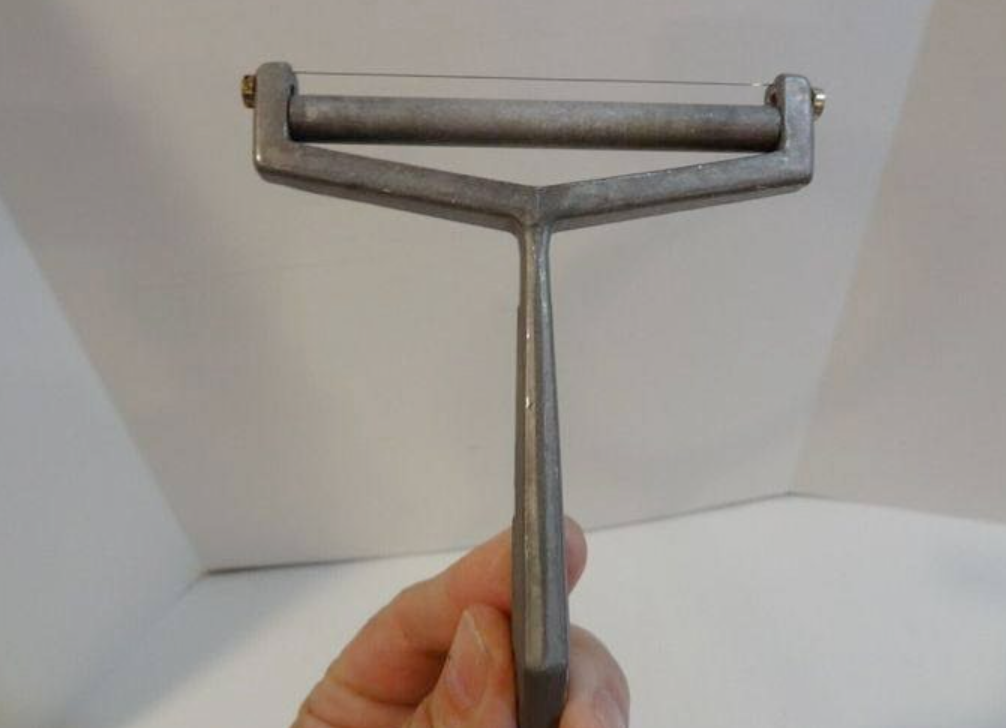
Bjørklund’s cheese cutter quickly gained popularity in Norway and quickly spread throughout Europe and the United States. Its appeal lies in its simplicity and efficiency, making it a must-have kitchen tool. The ability to produce uniform cheese slices with minimal effort and waste made it particularly attractive to homes and restaurants. By the mid-twentieth century, the cheese cutter had become a standard item in many Western kitchens, indicating the growing interest and consumption of cheese as a staple.
Over the years, the design of cheese slicers has evolved and different materials and mechanisms have been introduced to suit different types of cheeses and user preferences. Modern cheese slicers come in a variety of shapes, from the traditional handheld design with a taut wire cutter to more elaborate models with rollers and adjustable blades for cutting cheese of varying hardness. Despite these advancements, the core principle behind Bjørklund’s original design remains unchanged, attesting to its long-lasting efficiency and practicality.
The history of the cheese slicer also reflects broader cultural and culinary changes. Its invention and widespread adoption coincide with a period of significant changes in food production and consumption patterns. In the early twentieth century, there was a trend toward standardized and convenient food preparation methods, driven by technological advances and changing lifestyles. In this context, the cheese slicer represents a step towards greater efficiency and consistency in food preparation, reflecting the broader trends of the time.
Additionally, the popularity of the cheese slicer highlights the global expansion of cheese as a culinary product. Once considered a regional specialty, cheese has become a global food enjoyed in countless forms and flavours all over the world. The cheese slicer, by facilitating an easy and pleasant consumption of cheese, has played a subtle but significant role in this culinary globalization.
In conclusion, the cheese slicer transcends its role as a simple kitchen utensil; is a historical artifact that embodies the intersection of innovation, culinary tradition, and cultural change.
From Thor Bjørklund’s workshop in Norway to kitchens around the world, the cheese slicer has earned a special place as an essential tool for cheese lovers and casual consumers alike.
Their stories are a testament to the influence of simple inventions on our daily lives and culinary practices, reminding us that sometimes the most modest objects hold the most captivating stories.
