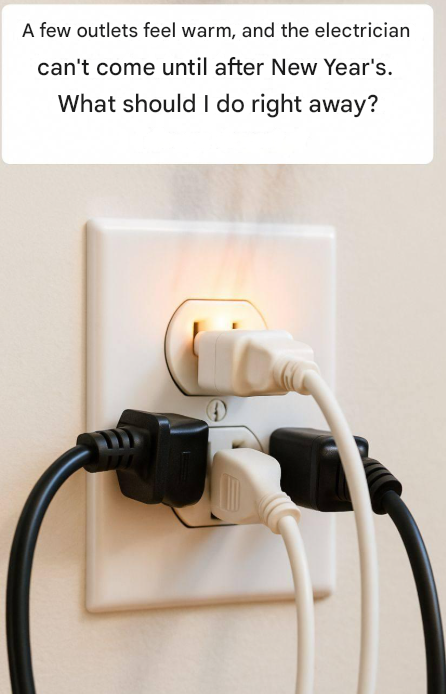
Once you’ve identified the hot outlets, the next step is to turn off the power to the affected circuit in the fuse box. Locate the fuse box, which is usually located in a utility room, basement, or garage, and identify the circuit that corresponds to the affected outlets. Circuit breakers are usually labeled, making it easier to find the correct one.
Turn off the circuit breaker to cut power to the circuit and ensure that no more power flows to the hot outlets. This precaution helps prevent further overheating and reduces the risk of fire. If you’re unsure which breaker to turn off, consider turning off the main circuit breaker to temporarily shut off power to the entire house until you find the correct one.
4. Unplug all electrical outlets and look for overloaded power strips
Once the power is off, unplug all appliances and devices plugged into the affected circuit’s outlets. This step is crucial because it allows you to assess the circuit’s load and identify potential sources of overload.
Pay special attention to power strips and extension cords, as they are often the cause of circuit overloads. Many people unknowingly plug multiple high-wattage appliances into a single power strip, exceeding its capacity and overheating the circuit. Remove unnecessary appliances and, if possible, distribute the load more evenly across different circuits.
5. The viral « hand test » for electrical outlets: How hot is too hot?
The « hand test » is a simple method for determining whether an electrical outlet’s temperature is a concern. Gently place the back of your hand on the outlet to feel if it is warm. An outlet that feels slightly warm may not be immediately dangerous, but an outlet that feels hot or uncomfortable should be considered a serious problem.
If the outlet feels hot, it’s a sign that the circuit is likely overloaded or has a poor connection. In such cases, it’s best to avoid using the outlet altogether and follow the steps in this article to minimize risk until a professional can inspect it.
6. Check for hidden power hogs: electric heaters,
See more on the next page
Advertisement
