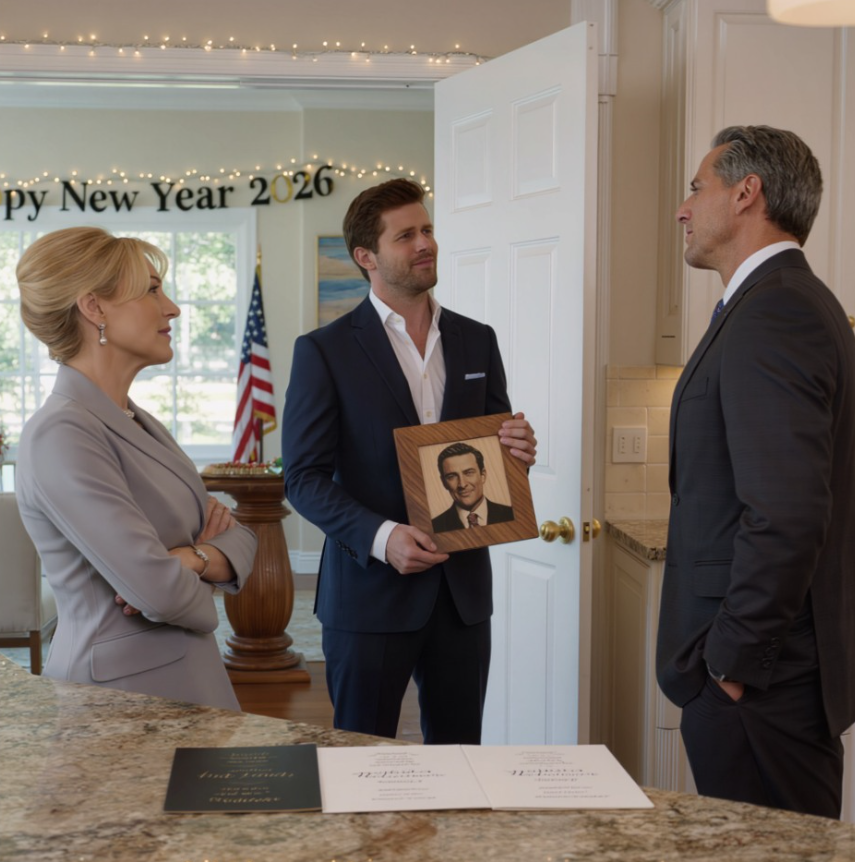
Before their birthday party, my parents took me aside and asked me the following question:
I was 29 years old at the time, but the images still haunt me, like a scene I can’t forget. My name is Josh, and if you were to ask most people who knew me as a child, they would probably say that I was a pretty quiet boy. Not shy strictly speaking, just cautious. I listened more than I spoke, I observed more than I participated. That’s probably why I noticed all the warning signs before the situation got out of hand.
My parents, Carla and Dennis, were the type of people who liked everything to be perfect. They thought only of appearances. If something went wrong, they didn’t fix it. They concealed it. They repainted the mess, rearranging the furniture, smiled at the neighbors, and hoped no one would ask too many questions. I spent most of my life pretending not to see the peeling paint. We weren’t a postcard family, but at least I thought we were normal.
My father worked in commercial real estate; always impeccably dressed, the phone glued to his ear as if it were sewn into it. My mom stayed at home, but ran her social life like a full-time job: fundraisers, brunches, birthday parties, charity events where everyone wore the exact same navy blue. They were very attached to the idea of leaving a mark, of building an admired life. The problem was that their definition of the admirable left little room for those who broke out of their thought patterns.
I was born late, I guess. I had difficulties at school, I didn’t go to higher education right away, I spent a few years doing odd jobs and trying to understand what I could do. Finally, I found my way. Custom-made carpentry, in fact: cabinets, furniture, decorative objects. There was something rooted in reality, something authentic. You couldn’t cheat with a dovetail joint. Either he held or he didn’t. I liked it.
At 28, I was running my own shop with a loyal clientele, even if it was still modest. I wasn’t rich, but I was proud of what I had accomplished. My parents weren’t. They never said it openly, but I could see it from the way my mother described my work to her friends: as an original hobby.
« Josh does his odd carpentry jobs. It keeps him busy, » she said, brushing it aside, as if I were building nesting boxes in a garden shed behind the house.
My father hardly asked any questions anymore. He would just whisper a « that’s good » when I told him about a big project or a client I’d landed. After a while, I stopped trying to impress them. I told myself that it was normal, that as we get older, our parents end up understanding us less. It happens to everyone, doesn’t it?
Then came the birthday party. It was their 35th wedding anniversary, and they had pulled out all the stops. They had rented a private room, evening dress, catered dinner, live music, the big game. My mother sent me an invitation in the mail, even though we spoke on the phone several times a month. It was a formal, engraved invitation, the kind of invitation you expect for a wedding. I really laughed when I opened it. There was even a reply card with a return envelope, as if I were just a guest.
I still filled out the form, checked the « present » box and sent it back the next day. I didn’t pay too much attention to it. I told myself that it was just another social evening and that I was ready to play the game. Putting on a suit, introducing myself, smiling, shaking hands, posing for photos. That was the role, right? The perfect son. I could do that for one evening.
I even offered to make them a personalized gift: a carved wooden portrait of the two of them, based on one of their wedding photos. It took me more than twenty hours to work out the details. I was planning to offer it to them that same evening, thinking that it would be a nice surprise, a rare moment of complicity.
The party was scheduled for Saturday. The previous Thursday, I received a call from my mother. Nothing unusual: she always liked to check in with me before big events. She told me that she wanted to sort out a few small details before the party. I assumed it was the schedule, the seating of guests, or something innocuous, so I agreed to drop by home after work.
That’s when things started to go downhill.
I arrived around 6 p.m. My dad was in his office and my mom took me into the kitchen like we were going to have a normal conversation. Then she glanced down the hallway, lowered her voice, and said, « We just wanted to talk to you about something delicate. »
She said « we, » but she talked to herself for a while. My father eventually joined us, leaning against the fridge, as if trying not to get involved, but knowing that he would have to support her at some point. My mom smoothed her dress as if she was on stage, then looked me straight in the eye and said, « Josh, we thought maybe it was best if you didn’t tell anyone you’re our son at the party. »
I blinked as if I had misheard her.
« What? »
She smiled tensely.
« Just for tonight. It’s… complicated, and we really don’t want to have to explain your situation to you now. »
My situation. It was that word that struck me the most, as if I were a problem to work around — a scheduling conflict, an unsightly element to erase from the picture.
I looked at my father, expecting him to step in and say she was exaggerating, but he didn’t. He just sighed and said, « That’s simpler, Josh. Many of our friends from the city are coming. They have certain expectations. »
« Any expectations? » I repeated, my voice weaker than I would have liked. « What does that mean, exactly? »
My mother touched my arm as if to comfort me, but I felt more like an attempt at bribery.
« It’s only for one evening. Just say you’re a family friend or salesperson. No one will ask questions. »
I really laughed. Not because it was funny, but because I didn’t know what else to do.
« You want me to lie about being your son so your friends don’t know what? That I didn’t go to Yale? That I make furniture for a living? »
They didn’t respond. My father looked away, and my mother’s mouth twitched as if she was going to cry. As if she were the victim.
And at that moment, something in me simply went out.
I didn’t scream. I didn’t throw the sculpture away or leave the place in a hurry. I just stood up, walked to the door, and said, « You don’t have to worry about me being at your party. »
My mother called out to me in a trembling voice.
« Josh, stop dramatizing. »
But I was already gone.
I got in my truck, drove home, and put the sculpture in the back of my closet where it has remained ever since.
They tried to call me several times after that. They left voice messages, both pleading and guilt-inducing. I didn’t answer. I didn’t celebrate Christmas, Easter or my father’s birthday that year. Eventually, the calls stopped, but the messages didn’t. They were simply passing from one person to another. My aunt. My cousin. Even my childhood neighbor, who ran into my mom at the supermarket and asked her why she never saw me again.
« She says you’re cruel, » my aunt told me one day over coffee, « that you cut ties with them for no reason. »
For no reason.
I didn’t correct it. I just smiled, nodded, and said I had a lot of work to do at the shop.
But lately, they had started contacting me again. Three years had passed – three long years of silence – and suddenly they wanted to talk to me to « dissipate tension ». They didn’t understand why I still harbored resentment. What they didn’t understand was that I wasn’t angry anymore. Not as they imagined. I was preparing something, and it would be discreet, precise – like everything I build.
I didn’t block their numbers right away. For a while after the incident at the party, I let the calls go directly to the voicemail. I stood in front of the screen, watching mom’s or dad’s cell phone light up like ghosts that I wouldn’t have buried properly, my thumb hanging, frozen. Sometimes I listened to the messages. Most of them were short.
« Josh, remind us. »
Or:
« Josh, it’s gone on long enough. »
The worst were the ones where my mother was crying. She always cried strategically. Never at funerals. Never during real family arguments – on his voicemail. It was his moment. The first time I heard her say, « I don’t understand why you’re so cold, » I almost threw my phone across the room. Not because of what she had said, but because of the convincing pain she seemed to have. It was almost impressive, all this staging. If I hadn’t been there, in the kitchen, that night, I could have believed her myself.
But I was there.
I remembered the temperature of the room, the light from the floor lamp reflecting off the granite countertop. I remembered that they couldn’t even say the words « my son » without choking, as if it was impure, as if it wasn’t appropriate.
And I remembered what happened next.
At first, I thought they would leave me alone. That maybe, deep down, they understood that they had crossed a line, but that was naïve. My parents didn’t apologize. They have changed their discourse. They rewrote the script and then distributed it to the rest of the troupe as if nothing had happened.
The rewriting began gradually. I was getting texts from my aunt saying things like, « I heard you couldn’t come to the party. Your mother was so sad that you had to cancel at the last minute. I didn’t answer.
Then came the guilt-ridden updates.
« Your dad was really hoping to see you at Easter brunch. He kept staring at the door as if you were going to come in. »
As if I was the one who had ghosted them without explanation.
The situation escalated from there. About six weeks after the party, I moved to my favorite coffee shop on a Sunday morning. I just wanted a quiet coffee and maybe a muffin. Nothing dramatic. But the barista – Jamie, with whom I had already chatted a dozen times, friendly and relaxed – looked at me with wide eyes and said, « Hey, I met your mother the other day. »
I stopped dead in my tracks, reaching out to take my wallet.
« Really? »
« She arrived with friends from the club. I told her that you had made our shelves to measure and she… Jamie hesitated. « Finally, she laughed. She said something like, « Oh, Josh has always been good with tools. He just never really figured out how to make a real career out of it. » »
I froze. I felt a wave of heat rise to my neck, slowly and intensely. Jamie seemed uncomfortable.
« I thought it was weird. I assumed she would be… I don’t know… proud. »
I managed to laugh.
« Yes, » I said. « You might think so. »
I got out of there and didn’t touch my coffee for hours. That night, I sat in my studio well after closing, sanding the same piece of mahogany until my joints hurt. I wasn’t even working on a project. I just needed to keep my hands busy so I wouldn’t punch a wall.
They were embarrassed by me. Very well. I could live with that.
But to make fun of me, to denigrate what I had built in front of strangers within my own community, was something else entirely.
I swore to myself that I would cut ties for good. No more calls, no more messages. I blocked their numbers, I unfollowed their social media accounts, I deleted our last family photo from my phone. I even put the old family albums in a box in the attic. Out of sight, out of mind.
But of course, they didn’t stop. They simply changed tactics.
It all started with my sister Emily.
Emily and I had never been particularly close. She was the model girl: only A’s, a prestigious university, married at the age of 25 to a square-jawed investment banker. She lived in a penthouse in the city, posted professional family photos as if it were a competition, and threw parties to reveal the sex of the catered baby. The last time we talked one-on-one, she asked me if I’d ever considered training for something more rewarding.
She called me one morning out of the blue. I didn’t recognize the number.
« Josh, » she says, as if we were in the middle of a conversation. « Can we talk? »
I almost hung up.
« What do you want? » I asked.
« Mom cried, » she said immediately. « She doesn’t understand why you’re putting her on the sidelines. »
« She asked me to pretend I wasn’t her son, Emily, » I retorted curtly. « At their birthday party. Do you realize how crazy it is? »
There was a silence.
« She didn’t think it that way. »
I laughed, bitterly.
« What did she mean? »
« She… She just didn’t want to answer questions. You know how their friends are. They don’t understand people who take unconventional paths. »
See more on the next page
Advertisement
